


Assessing Food Safety Performance More Effectively
Under the past grading system, grades were assigned based on an annual grading inspection, which provided a snapshot of the food safety standards at that point of time, and did not reflect whether they were consistently maintained.
The SAFE framework changes this entirely. By evaluating establishments based on their food safety track records over time, and the systems put in place to ensure food safety, SAFE paints a more accurate picture of food safety standards.
Under SAFE, food establishments with consistent good food safety track records will attain higher grades, while those with poor track records will be given lower grades, and be subjected to more frequent inspections.
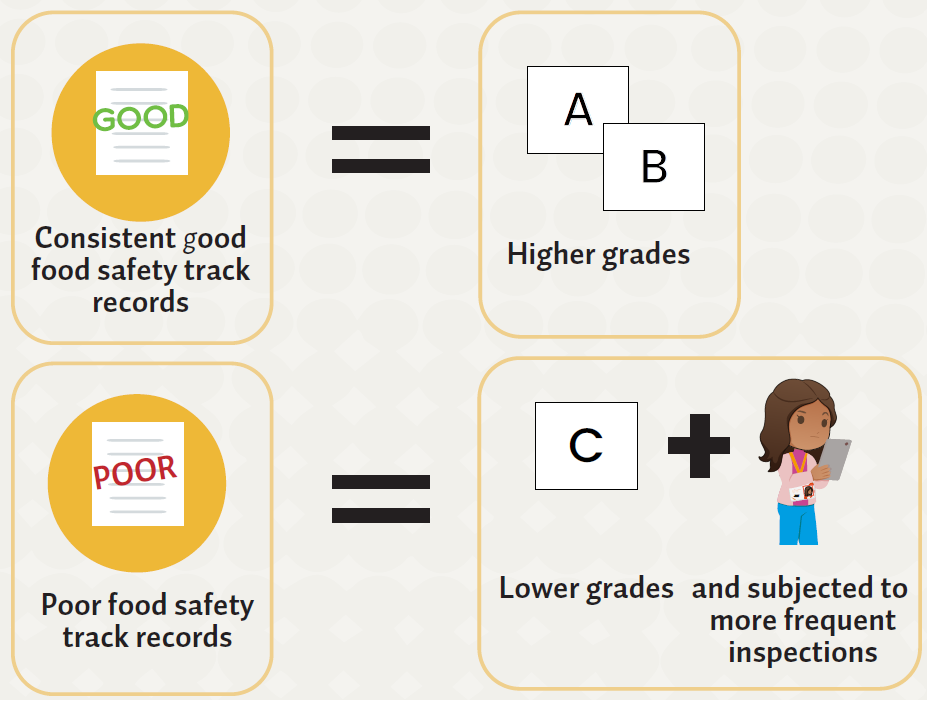
As Dr Tan Lee Kim, SFA's Director-General (Food Administration) and Deputy CEO (Food Safety), explains, this approach provides "a more effective way to assess food safety performance" whilst "recognising food establishments which consistently maintain high standards." She adds that “this is the outcome of extensive engagement with industry stakeholders, and SFA will work with food establishments through this transition.”
Understanding How The Framework Works
The SAFE framework will be implemented in two phases. Phase 1 took effect on 19 January 2026, while more details on the implementation of Phase 2 will be announced by 2027.
The framework applies to approximately 45,000 SFA-licensed food establishments that process or prepare food for sale to the public. These food establishments are grouped into two categories:
- Category 1 – Significant processing or preparation of food
- Category 2 – Low/moderate levels of processing or preparation of food
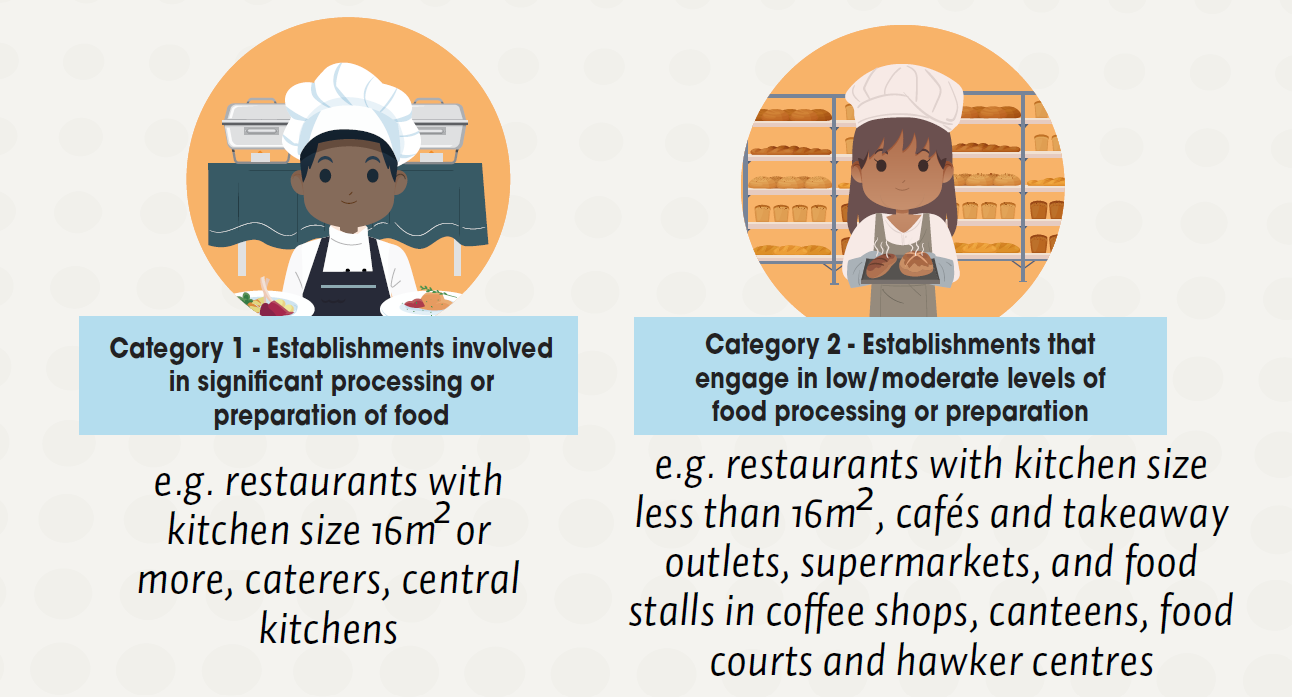
Each establishment is assigned a grade ‘A’, ‘B’, or ‘C’ based on its food safety track records, and implementation of a Food Safety Management System (FSMS) with the appointment of an Advanced Food Hygiene Officer (AFHO).
Those in operation for less than a year will start with a ‘NEW’ grade, allowing newly established businesses time to build their track records, whilst providing transparency for consumers.
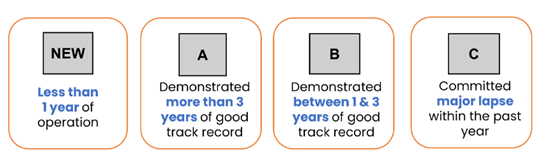
In Phase 1 that is currently in effect, SAFE grades are assigned based solely on food safety track records for both Category 1 and 2 establishments. Those who have maintained a good food safety track record of more than three years will receive an ‘A’ grade, while those with between 1 and 3 years will get a ‘B’.
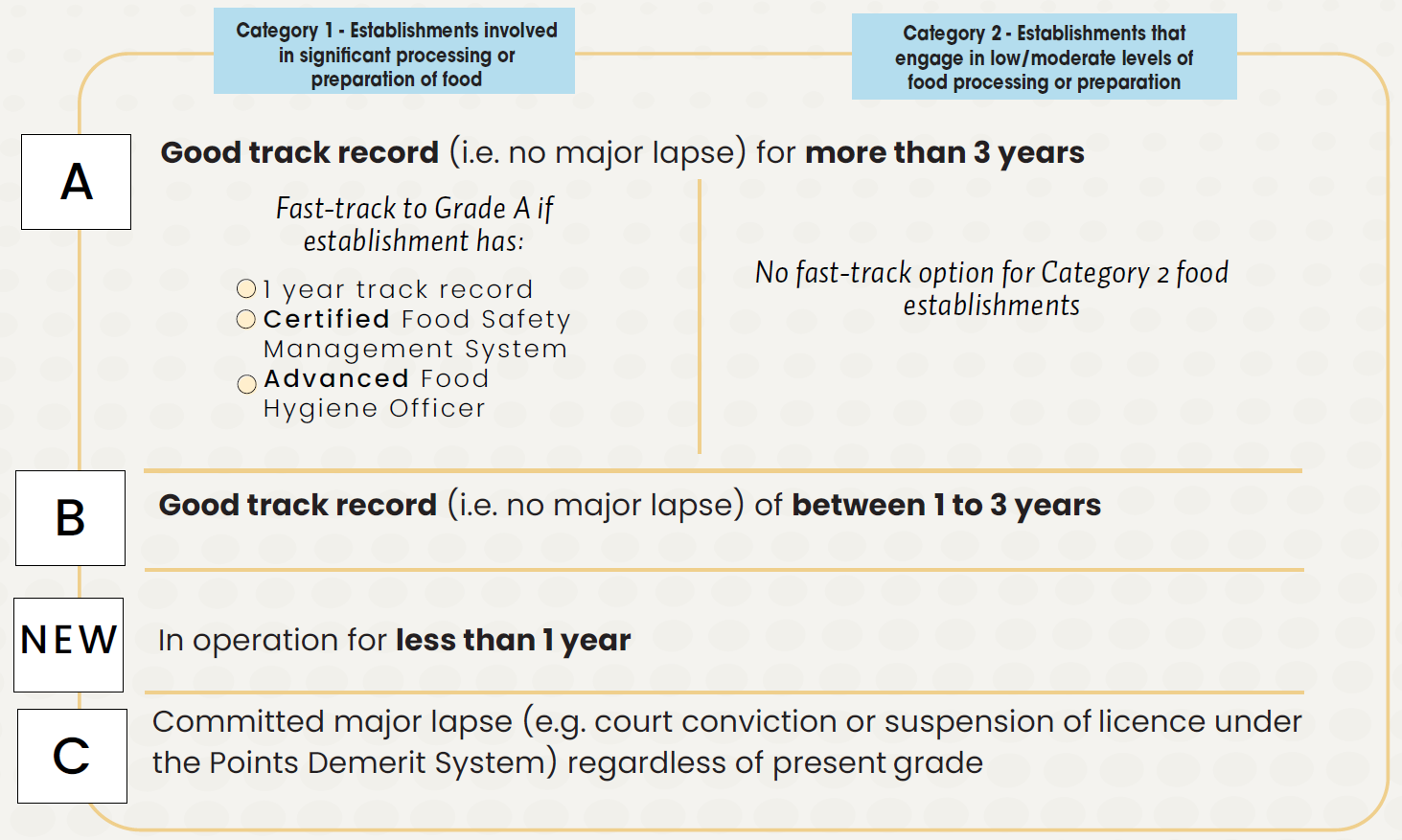
In Phase 2, of which implementation details will be announced by 2027, only Category 1 establishments seeking to attain or maintain an ‘A’ grade must meet additional requirements of appointing an AFHO and implementing a FSMS. Category 2 establishments will continue to be graded based solely on their food safety track records.
In both phases, a fast-track option is available for Category 1 food establishments to attain grade ‘A’ if they have at least one year of good food safety track records, appointed an AFHO and implemented a certified FSMS. This option is not available for establishments that have been downgraded to Grade 'C' due to major food safety lapses.
The framework also maintains clear consequences for major lapses in food safety (such as a court conviction for food safety offences or suspension of licence under the Points Demerit System), which will lead to an immediate downgrade to a ‘C’ grade regardless of the establishment’s present grade.
Grades at Our Fingertips
Under the previous system, physical decals were updated annually following inspections and may not reflect real-time changes.
With SAFE, consumers can easily access grades by scanning QR codes displayed on SFA licences at food establishments, or by visiting SFA's Track Records for Licensed Food Establishments webpage online. This digital approach ensures consumers receive the most up-to-date and accurate information about each establishment's grade and track record, mitigating the risk of outdated decals being displayed at premises. Establishments must remove their old grade decals and ensure that only current, accurate grade information is available to consumers.
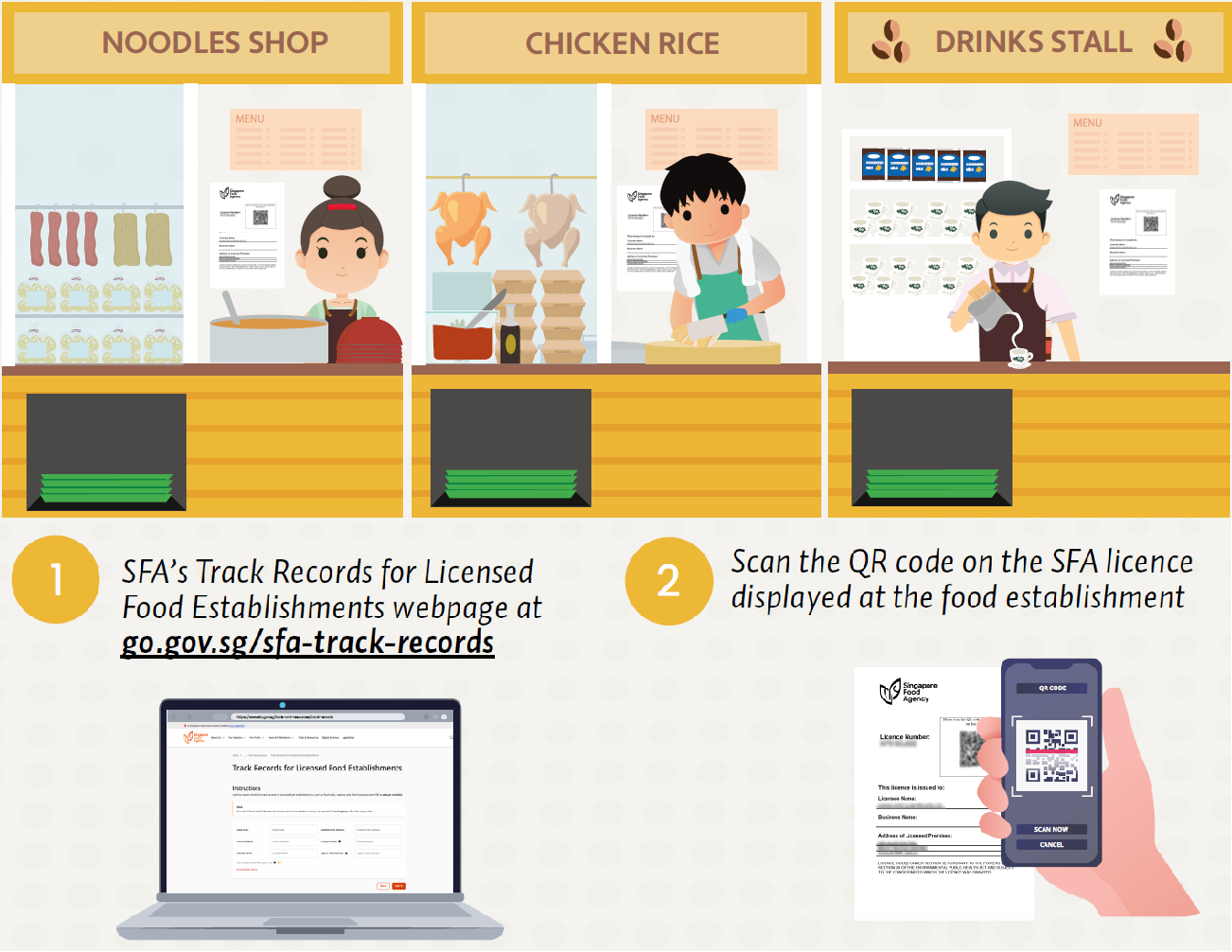
Consumers who are less digitally savvy or without smart devices can request the grade from the stall operator or seek assistance from a fellow diner with a smart device. SFA has also partnered with the Infocomm Media Development Authority (IMDA) on the Seniors Go Digital programme to teach seniors on how to use their phone cameras to scan the QR codes at food establishments, ensuring the system remains inclusive and accessible to all segments of the population.
This transparency serves multiple purposes. For establishments, it encourages accountability and incentivises consistent good food safety performance. For consumers, it enables more informed decision-making with up-to-date information of establishments’ food safety performance.
Watch a short video below for a quick overview of SAFE, and how easy it is to check grades:
Shared Responsibility for Food Safety
Food safety is a joint responsibility between the industry, government and consumers.
While SFA provides regulatory oversight, support, and recognition of the food industry through initiatives like SAFE, industry stakeholders should strive to uphold good food safety standards to retain and build consumer trust. Consumers can also be more aware of what the different grades mean and how to check them to make more informed dining choices and support food establishments that prioritise food safety.
Together, we can improve food safety standards in Singapore and ensure safe food for all!


