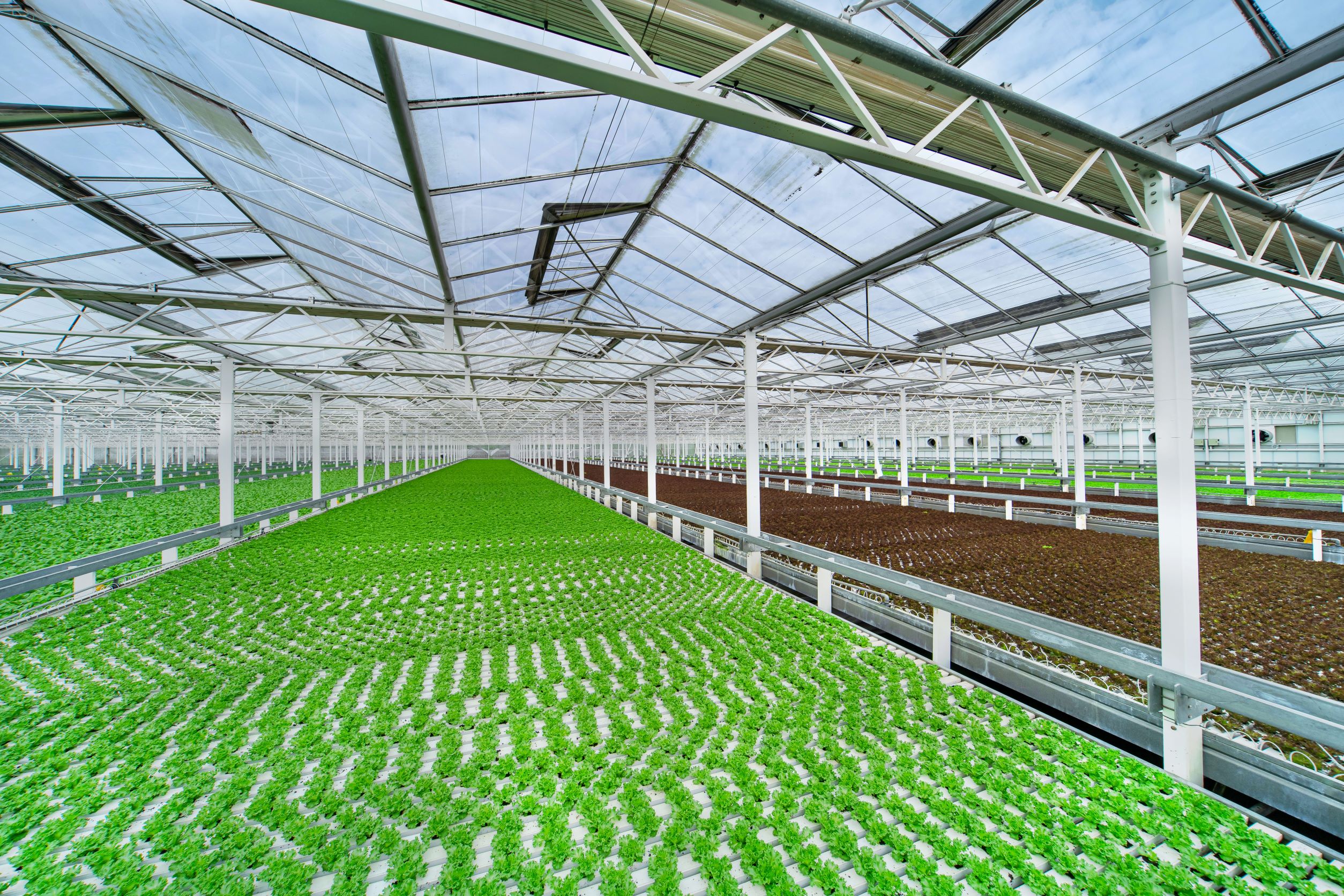
Inside the 150,000-square-foot Green Harvest greenhouse, a field of emerald green vegetables move on their automated journey from seed to harvest
By the time you finish reading this sentence, somewhere in the western reaches of Singapore, a head of Crystal lettuce would have been vacuum-cooled to lock in its crispness, packed into a crate, and loaded onto a truck bound for your neighbourhood supermarket. In five hours, it will sit on a refrigerated shelf. By dinner time, it could be on your plate.
This is the rhythm of Green Harvest, one of Southeast Asia's largest hydroponic glass greenhouses—a 150,000-square-foot powerhouse of controlled agriculture where the ancient art of growing food has been reimagined for a nation that imports over 90 percent of what it eats.
Step inside on any given morning and the first thing you will notice is the light—natural sunlight streaming through glass panels, bathing thousands of lettuce heads in a warm glow. The air carries the unmistakable scent of crops growing. Automated channels hum softly as they glide along their tracks, carrying plants through their brief but carefully orchestrated journey from seedling to harvest.
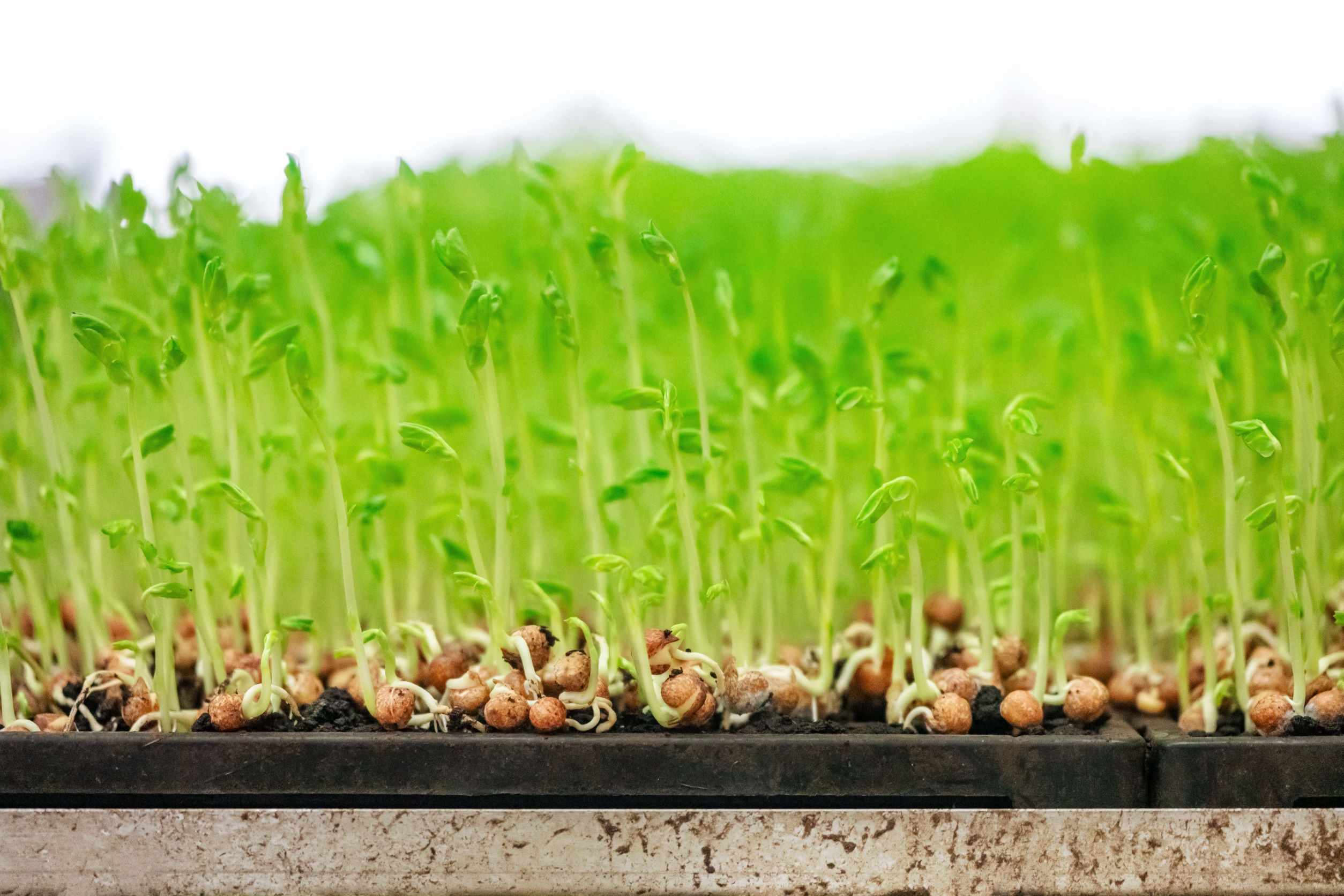
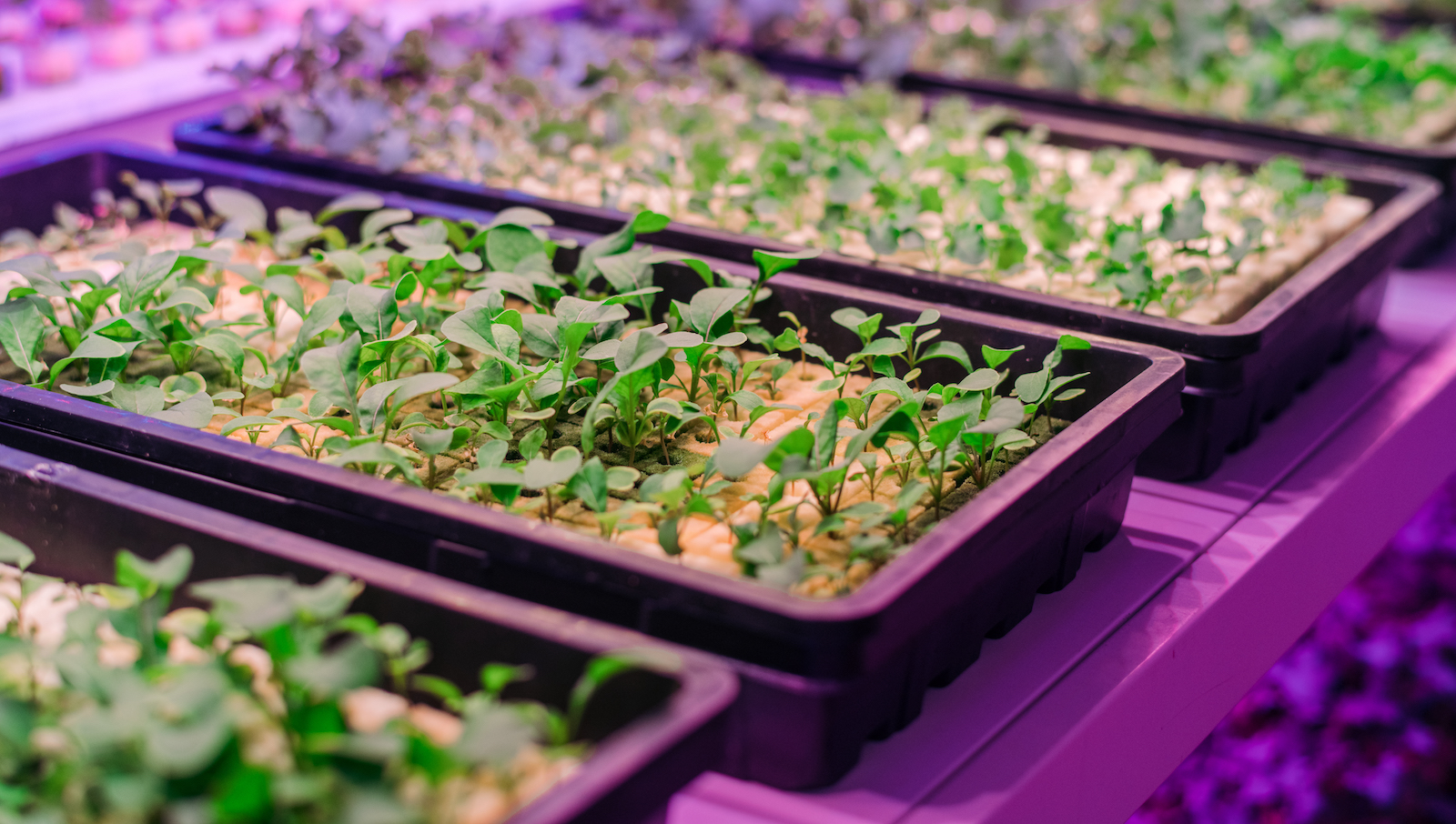
Vegetable seedlings sprouting at the Green Harvest farm getting ready for the next stage in their journey to supermarket shelves
"People call vegetables perishables," says Desmond Ang, Green Harvest's Sales and Marketing Representative, standing before rows of emerald butterhead lettuce stretching toward the glass canopy above. "But I prefer to think of them as the fastest moving consumer goods. The moment you harvest, the clock starts ticking. Our job is to race that clock and win."
Where Heritage Meets Engineering
Green Harvest exists because two expert institutions decided to bet on Singapore's agricultural future. The family behind Kok Fah Technology Farm brought four decades of soil-stained wisdom to the table. Teambuild Construction Group contributed the engineering precision and project management muscle. Together, in 2018, they began transforming a plot of land into something unprecedented.
"We didn't want to do it alone," explains Dave Huang, Green Harvest's Business Development Director and a member of the Wong family's farming legacy. "This was going to be large and high-tech. We needed a partner who could build and deliver the project successfully."
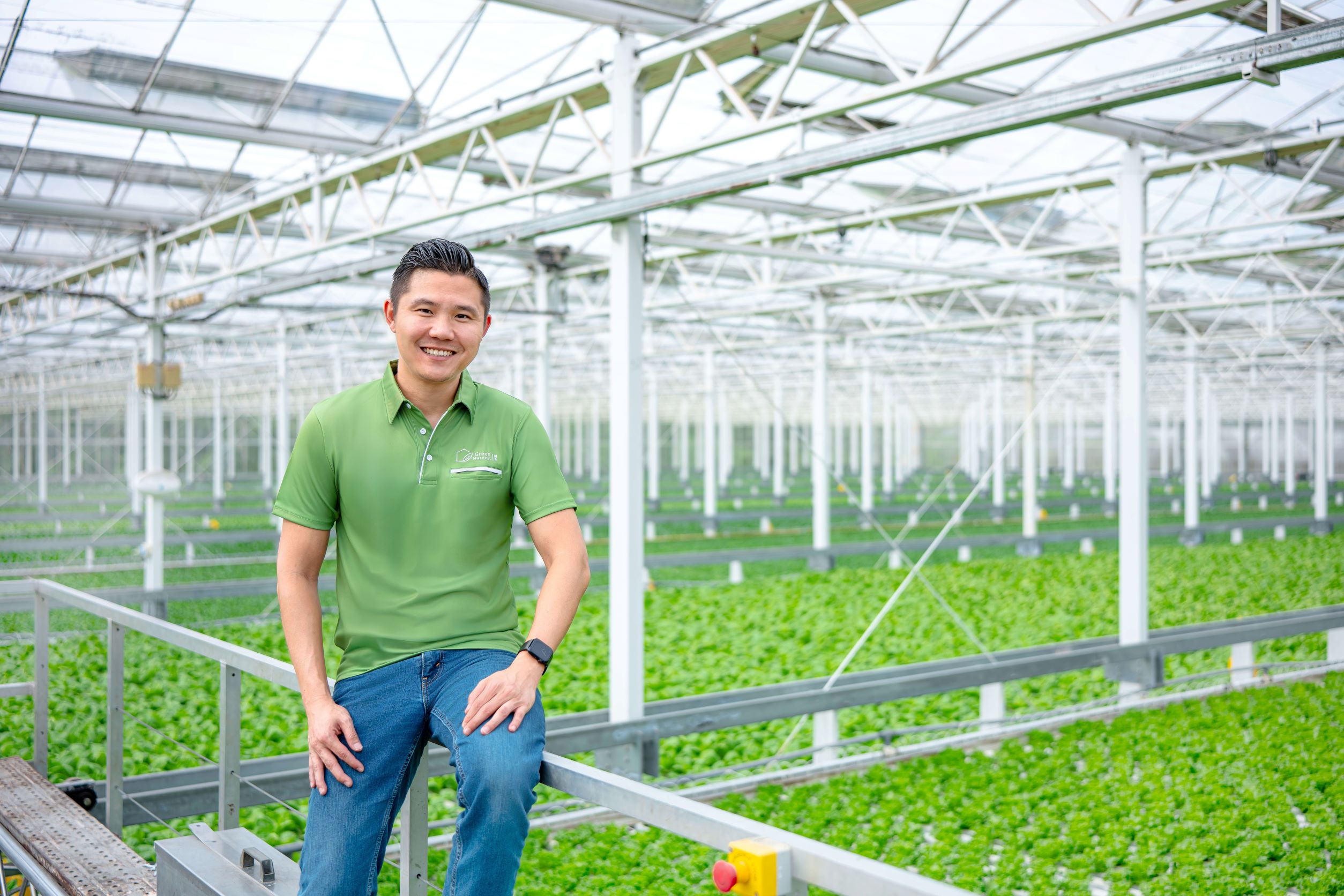
Green Harvest Business Development Director Dave Huang is a second generation farmer from the Wong Family, owners of Kok Fah Technology Farm
Four years of research and development preceded the first commercial harvest. The team built an experimental facility in Sungei Tengah to master hydroponics, a system at that time foreign to their soil-farming heritage. They studied nutrient control, irrigation calibration, and how to coax the best from modern sensors. That said, even though nutrient control is mainly automated, manual checks are still made to ensure that readings make sense, and the plants are responding well. This gives a balance of stability and accuracy. Only when they achieved consistent quality did they scale up.
The result is a facility that can produce up to 4,000 kilograms of leafy greens daily, enough to supply the vegetable needs of over 15,000 Singaporeans[1]—enough for residents living in 50 to 60 HDB blocks. Those numbers represent more than agricultural output. They represent food security, made tangible.
For Huang, one moment stands above the rest: watching Green Harvest transform from bare ground to full production. "Building a farm is not just building a structure—it is building the system, the team, and the discipline to produce consistently. Seeing everything come together was very meaningful for me."
The Value of Speed
Walk through Green Harvest on a Tuesday morning and you will see the Mobile Gully System in full operation—a ballet of automation that eliminates wasted space entirely. Traditional farms require walkways for workers to move between rows. Here, the rows move instead. Automated channels shift as plants grow, ensuring every square inch of the greenhouse earns its keep.
[1] Based the total consumption of 564,300,000kg of vegetables in 2024 by a population of about 6.04 million people in Singapore, each person would consume roughly 93.4kg of vegetables in a year, which is equivalent to an average of 256g per day. (4,000kg ÷ 256g/person = 15,625 people)
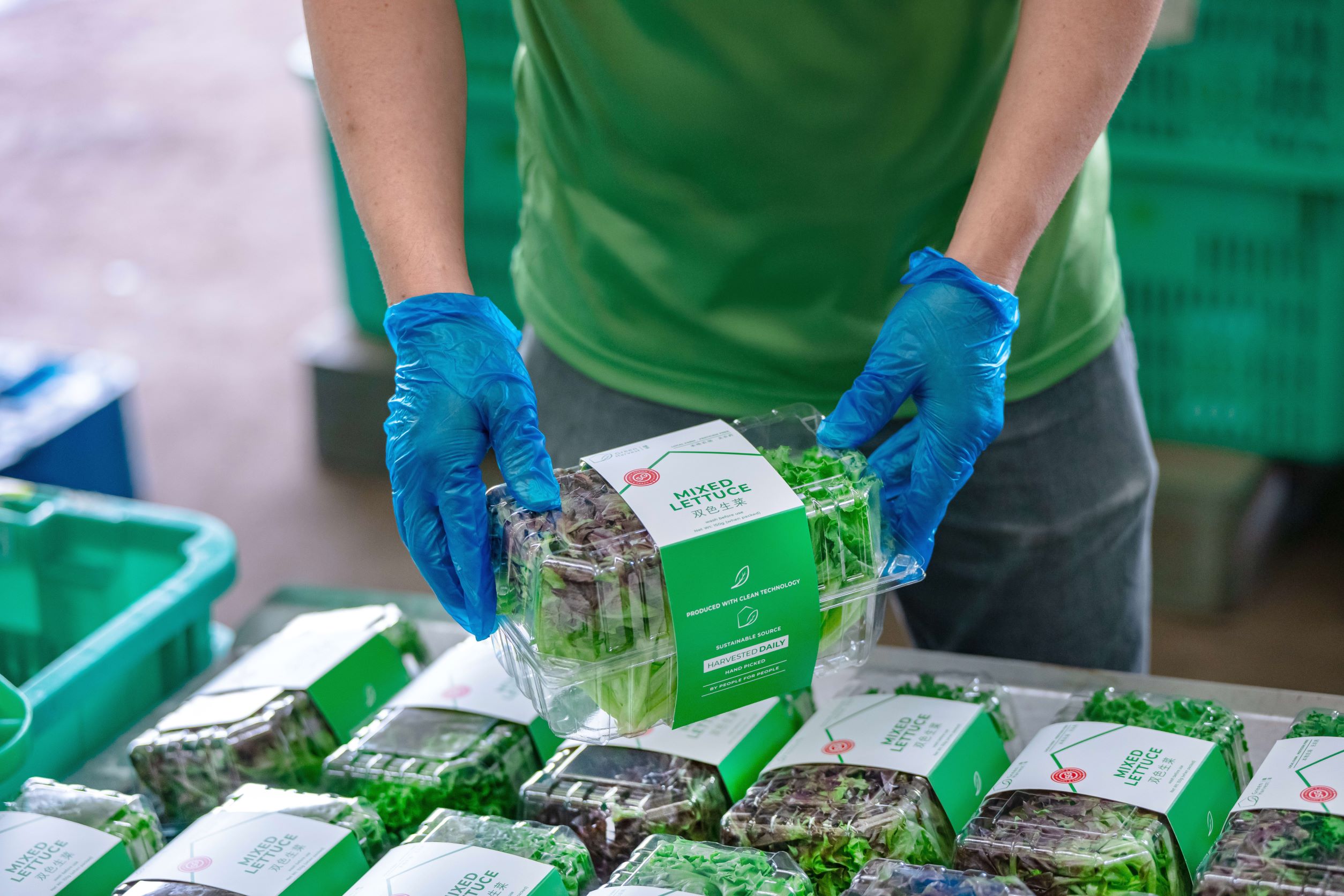
Fastest moving consumer goods: mixed lettuce being packed and labelled at Green Harvest farm
For certain varieties like the salad mix, the journey from seed to supermarket shelf takes just 5 to 7 days. Consider what that means: a week ago, that salad mix was a handful of seeds being placed into rockwool cubes. Today, it is crisp, nutrient-dense, and ready for your kitchen.
Speed matters because a vegetable’s lifespan ends the moment they are harvested. Research from the University of California Davis Post Harvest Centre documented that certain vegetables could lose up to 90 percent of their vitamin C within days of harvest. The longer produce travels from farms across borders and through distribution centres, the more nutrition quietly evaporates.
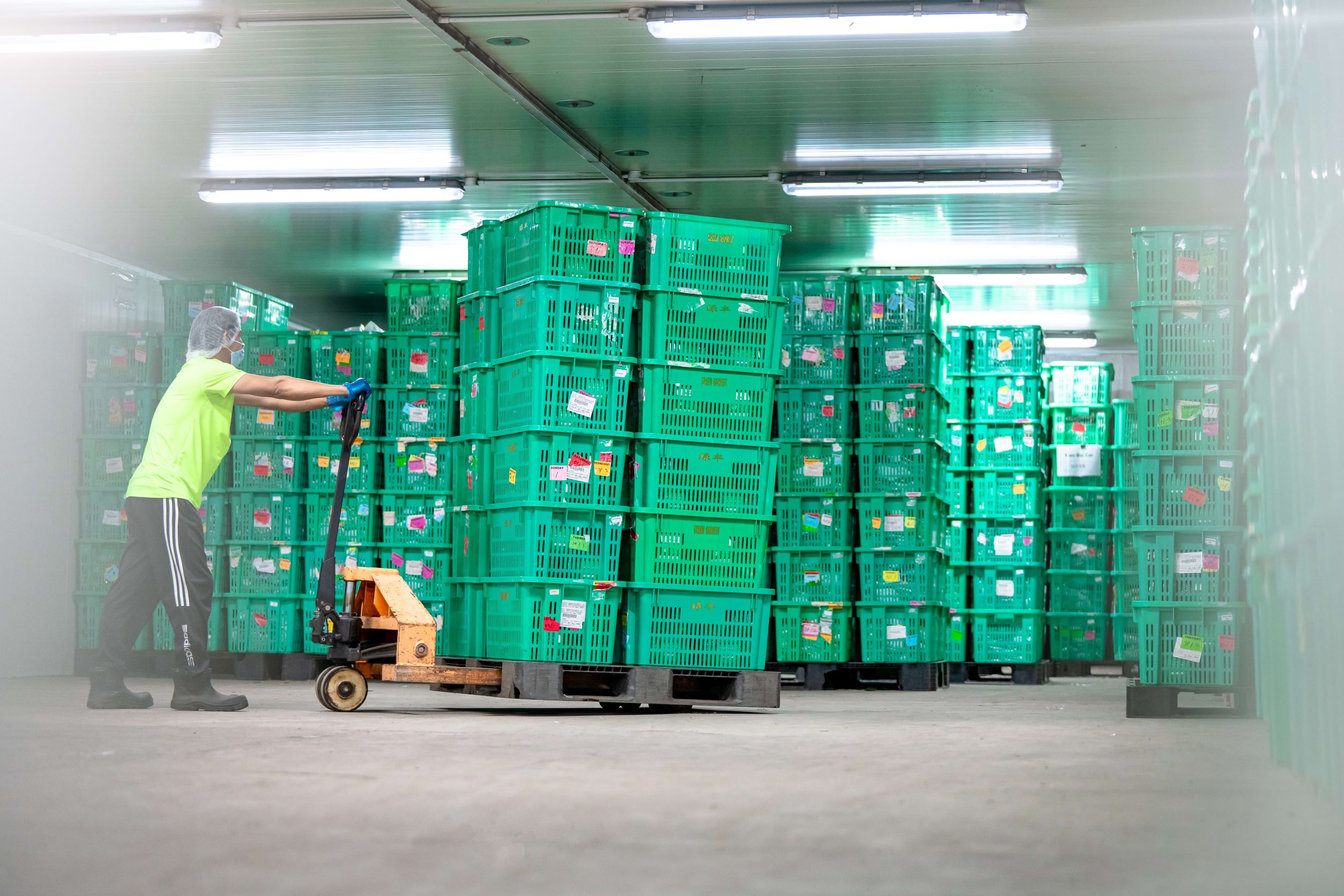
Vegetables are stored in the cold room at Green Harvest farm just before they are loaded onto trucks bound for retailers and restaurants
Vegetables are stored in the cold room at Green Harvest farm just before they are loaded onto trucks bound for retailers and restaurants
"By maintaining a constant cold chain and delivering to retailers within 24 hours," Ang explains, "we minimise the chances of vegetables losing their natural goodness. Imported vegetables might take a few days to reach consumers, and they may not maintain proper temperature control throughout. Our local produce has a clear edge."
The Invisible Shield
The glass facades surrounding Green Harvest do more than let in Singapore's abundant tropical sunlight. They create a sealed environment where controlled ventilation acts as an invisible shield against pests. The system works by maintaining slightly higher air pressure inside the greenhouse than outside, physically pushing insects away every time a door or vent opens.
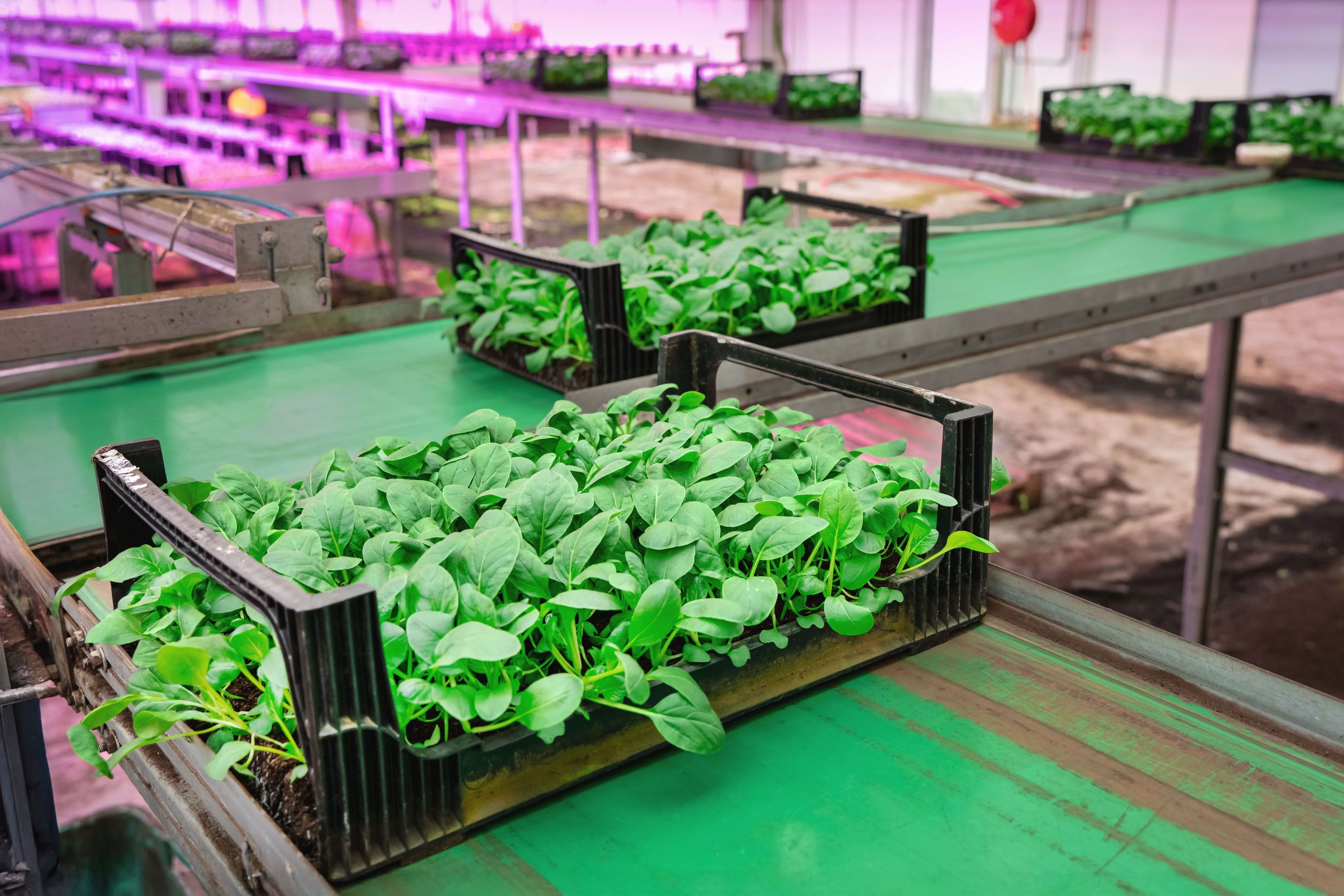
Vegetables midway through their journey to harvest on the lower level of Green Harvest’s greenhouse, which is a sealed environment that allows for pesticide-free growing
The result is pesticide-free farming at industrial scale—no chemical interventions, no residue concerns, just clean produce grown in conditions that prevent infestations before they can even enter.
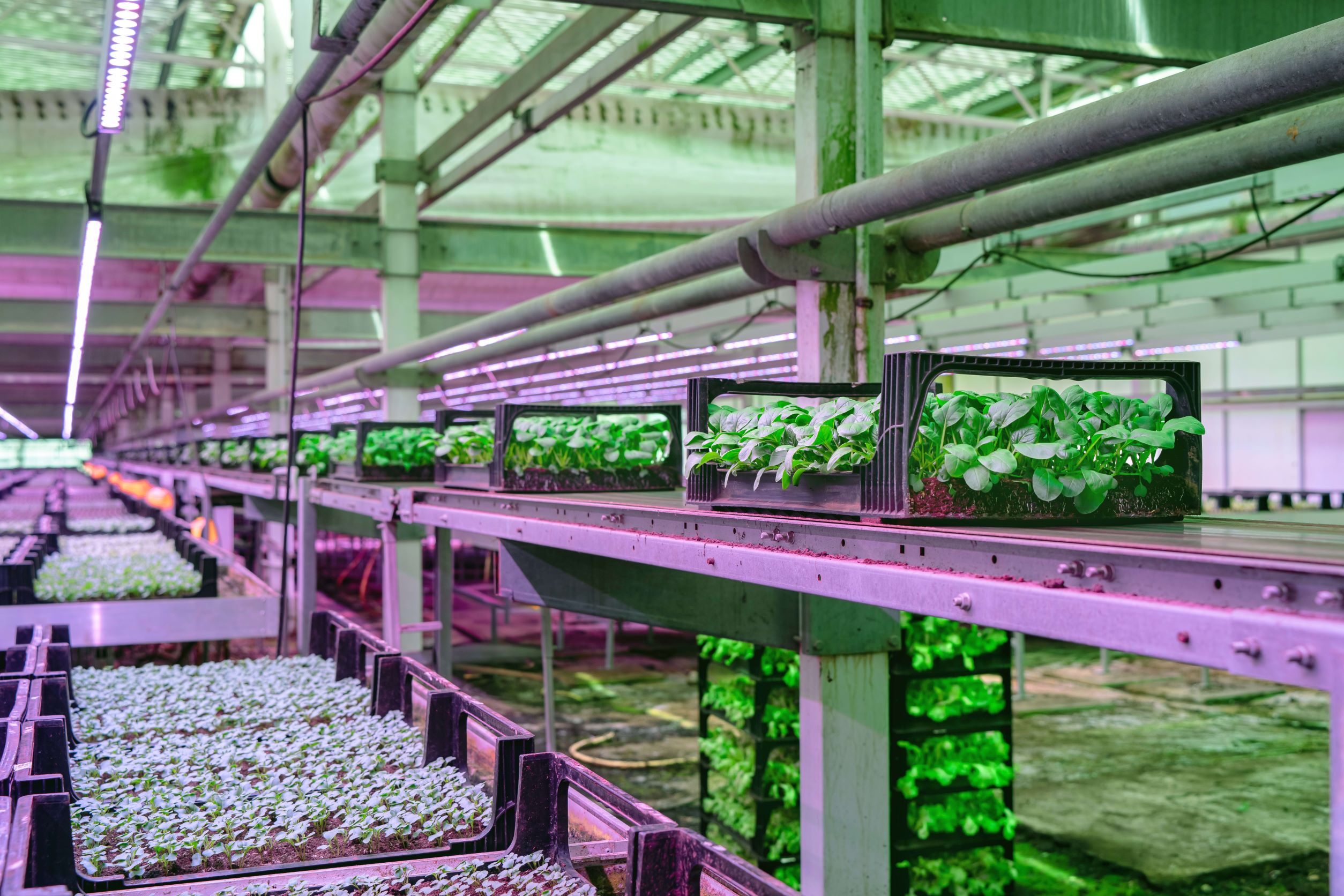
Green Harvest’s irrigation is a closed-loop system that recirculates water supply which is supplemented by rainwater capture
Water, too, tells a story of efficiency. Green Harvest's closed-loop system captures and recirculates every drop, while rainwater harvesting supplements the supply. The facility uses up to 90 percent less water than conventional soil farming—a critical advantage in a nation where water scarcity remains an existential concern.
Happy Farmers, Happy Veggies
Green Harvest's tagline is not mere marketing. "If our team works in a better environment, the vegetables will also grow better," says Huang. The facility was designed with worker wellbeing in mind—waist-level workstations reduce bending and heavy lifting, ergonomic considerations woven into every process. When farmers feel better, they work better, and the crop handling improves accordingly.
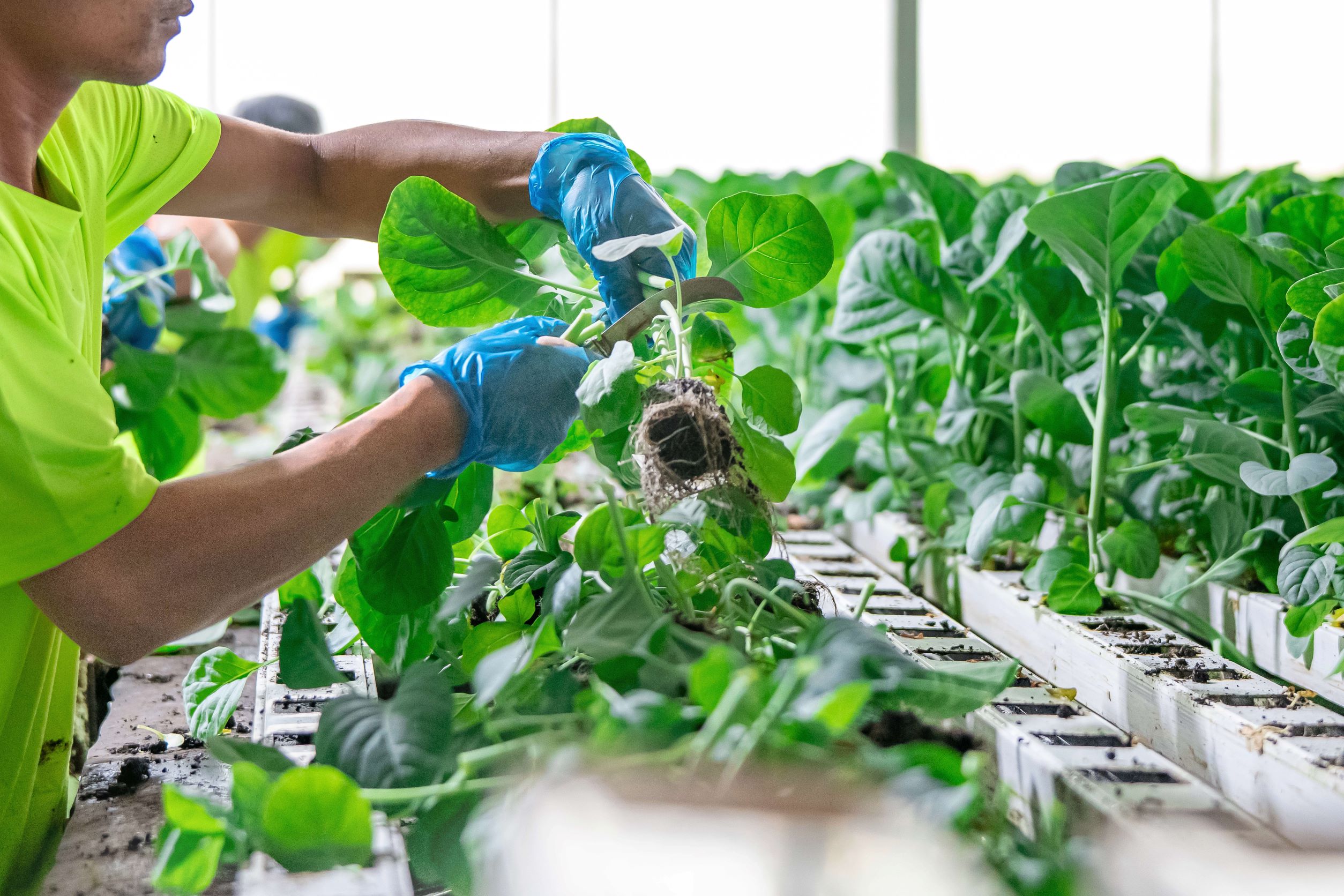
A farmer harvests komatsuna at a waist-level workstation designed to reduce bending and heavy lifting – an ergonomic consideration that is part of Green Harvest farm’s processes
A typical day begins with a farm walk. Staff check plants, examine roots, and observe overall conditions before reviewing climate data, irrigation metrics, and nutrient readings. Harvesting, transplanting, packing, and cleaning follow, because hygiene and food safety are inseparable from modern farming. When issues arise, the team troubleshoots immediately, adjusting settings or processes on the fly.
"Modern agriculture today is not just dirty work in the sun," Huang reflects. "It is a mix of biology and technology. You will still work with your hands, but you will also work with systems, sensors, and data. If you like problem-solving, learning new skills, and working in a team, modern farming can be a strong career."
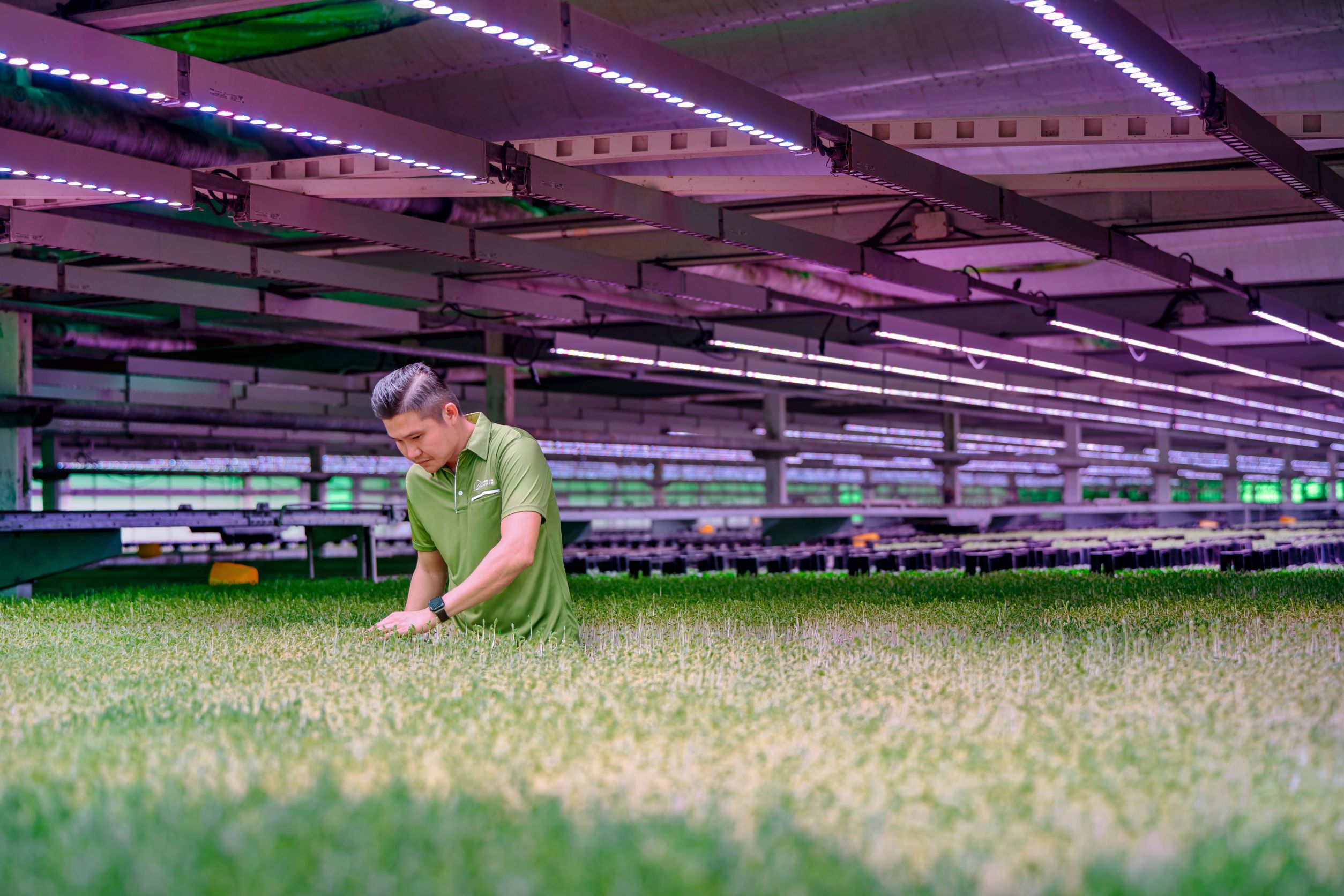
Dave Huang inspecting seedlings on the lower level of Green Harvest’s greenhouse
The Taste of Freshness
Does locally grown produce actually taste different? Huang does not hesitate. "Fresher vegetables taste different. When it is harvested fresh, it is usually crunchier and more flavourful compared to vegetables that have been stored for a few days. That is why we are proud that we can deliver within 24 hours from harvest."
His personal favourite is the crystal lettuce, a variety prized for its satisfying crunch and clean taste. Available at all major supermarket chains in Singapore as well as online platforms like RedMart, customer feedback has been consistently positive, particularly regarding the quality and freshness of the lettuce varieties. The absence of negative feedback on taste, Ang notes with a smile, is its own form of endorsement.
Pricing tells an interesting (and unexpected) story. While Green Harvest prices its Asian leafy vegetables slightly higher than imported produce from neighbouring countries, its lettuce and salad prices are generally lower or comparable.
Looking Forward
Technology will play an increasing role for Green Harvest. More artificial intelligence, more sophisticated sensors, deeper automation. Huang predicts gradual changes in the near term: better monitoring, richer data, targeted automation. In the longer term, perhaps six to ten years out, robotics and AI decision support could transform harvesting and operations entirely. Yet even then, good farming skills will matter. Technology supports growers; it does not replace them.
Your Choice, Our Resilience
Sufficient demand is crucial to ensure the viability of our farming sector —a virtuous cycle where consumer support enables further investment in local production capacity. "Supporting local produce is one simple way everyone can contribute to Singapore's food resilience," Huang says. "When you choose local, you help local farms grow, invest more, and supply more consistently. Even small choices matter - buying local is a practical way to support our national resilience."
The next time you reach for a head of lettuce in the supermarket, pause for a moment. Consider where it came from, how far it travelled, how many days have passed since it was last a living plant drawing nutrients through its roots. Think about the invisible journey—the cold trucks, the distribution centres, the time zones crossed.
Fascinating farm facts
Modern day farming is a fascinating profession. Here are some fascinating factoids to chew on!
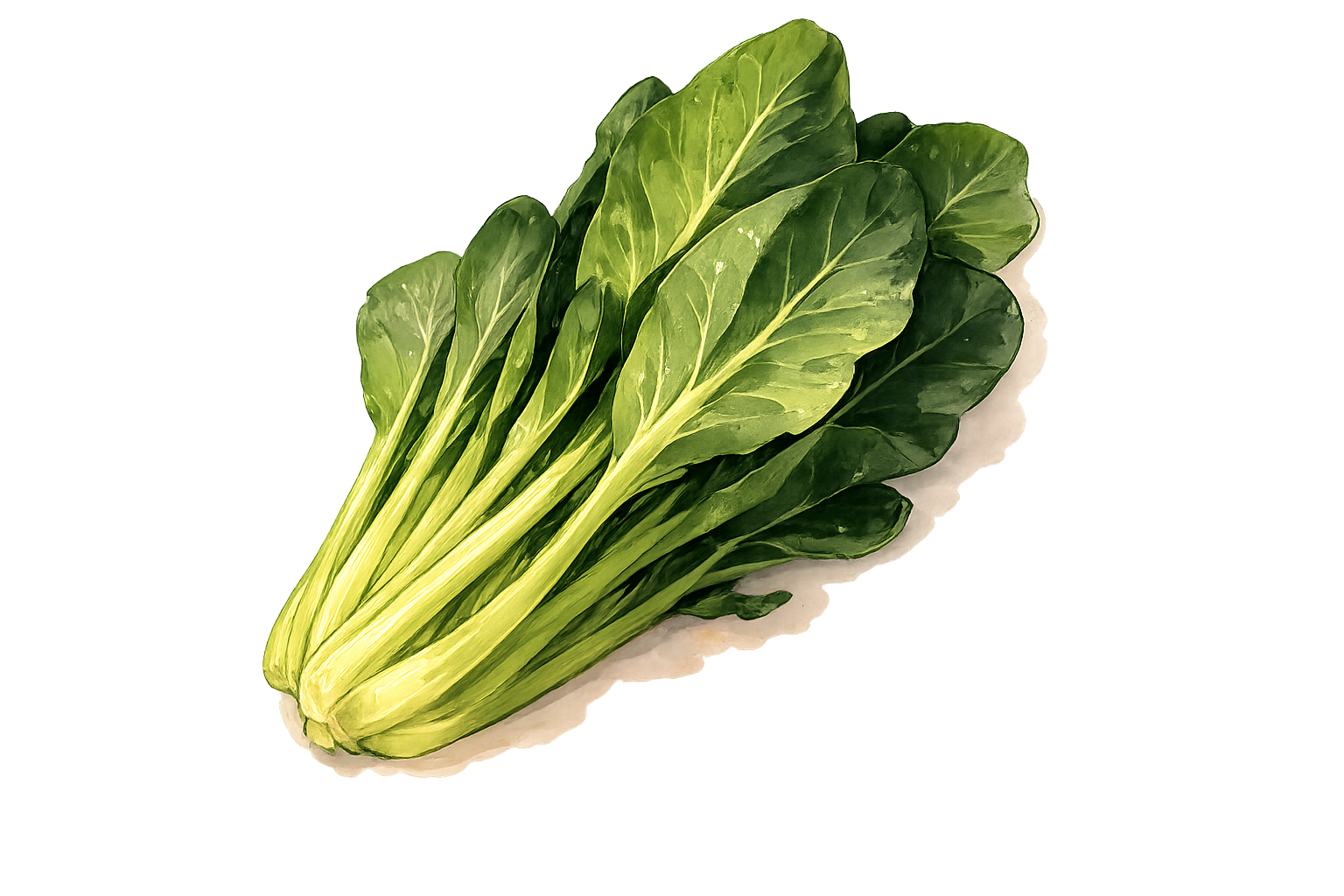
Komatsuma or Japanese mustard spinach is a leaf vegetable. One of Green Harvest’s popular produce, it got its name from the Komatsu River in Edo-period Tokyo (from around 1603 to 1868), where it was first cultivated for a feudal lord.
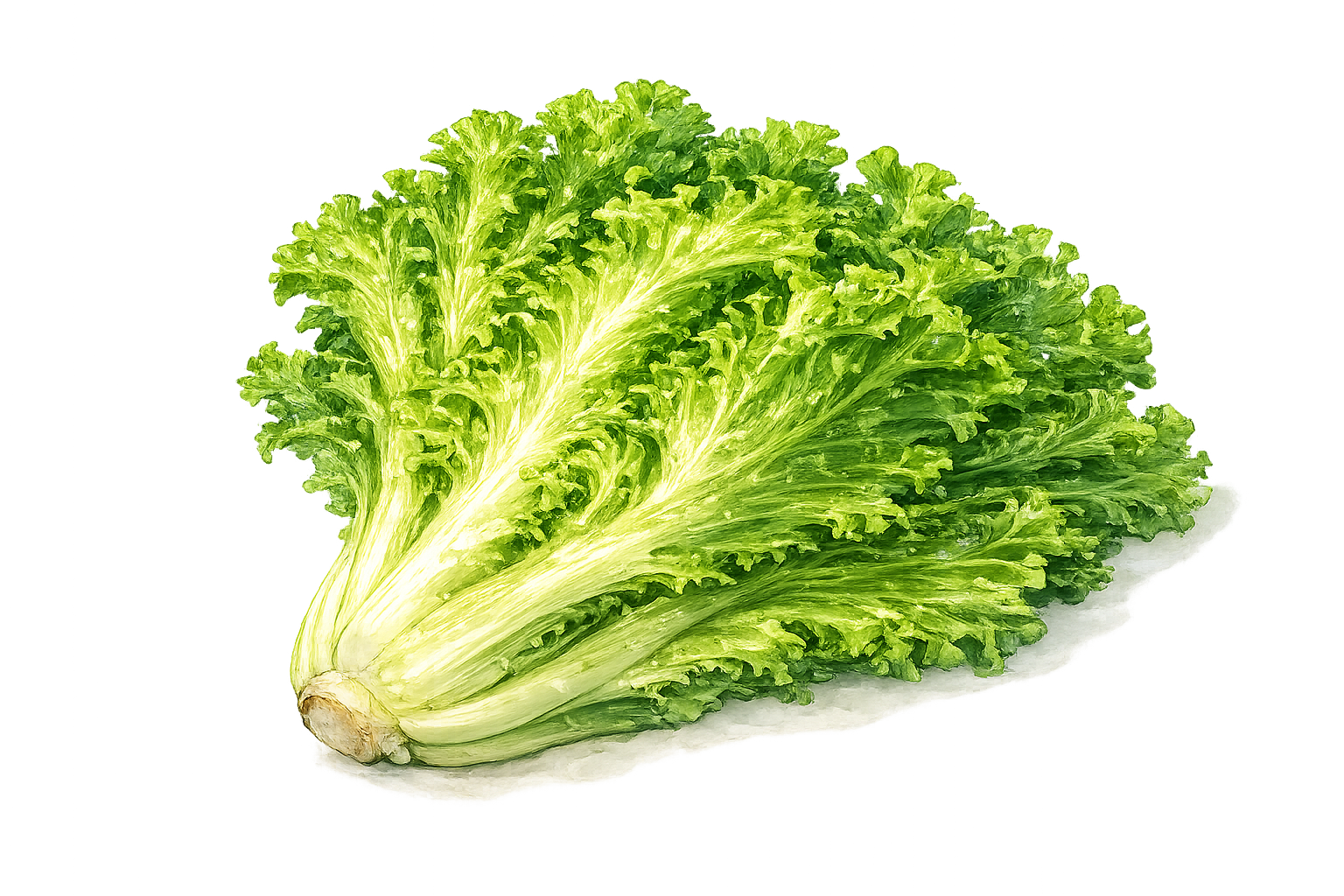
Crystal lettuce was bred to thrive in water-based growing systems such as those here at Green Harvest. It delivers a satisfying crunch with a faster growing cycle!
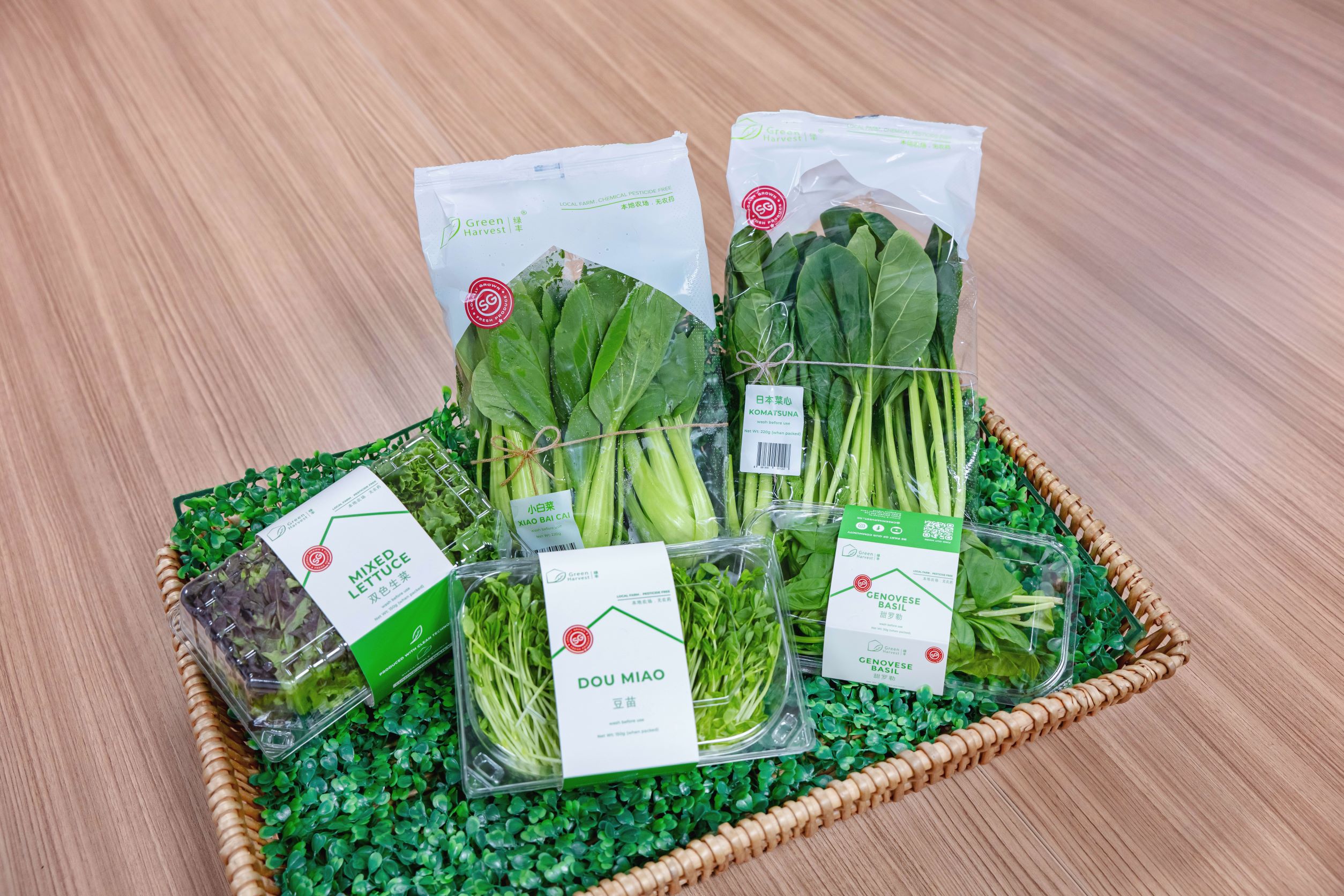
The next time you’re at the supermarket, look out for packaging that carry the red and white SG Fresh Produce logo
Then look for the red-and-white SG Fresh Produce (SGFP) logo on vegetable packaging. Somewhere in Singapore, 4,000 kilograms of fresh produce are being harvested today. Some of it—crisp and nutritious—could be on your plate tonight. And it will stay that way for a much longer time in your fridge, to be enjoyed another night. Every time you add local produce to your meal, a small but meaningful contribution is added to something larger. In the nation’s race toward its 2035 food security goal, every purchase is a vote for the future we want to build.